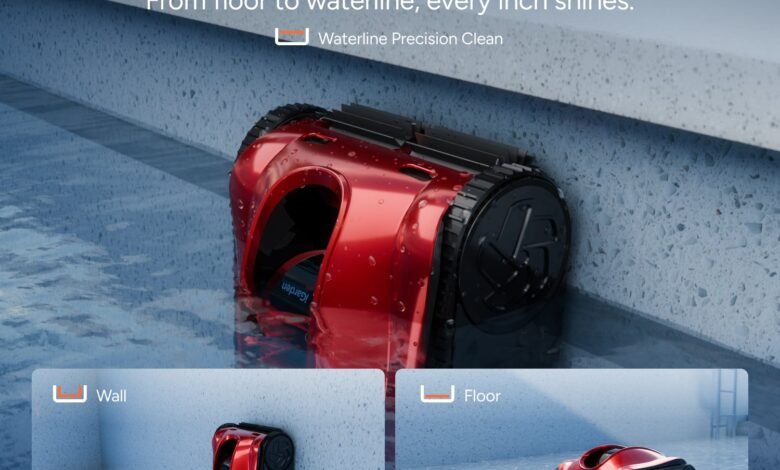
If you’ve ever spent a Saturday afternoon wrestling with a telescoping pole, manually guiding a vacuum head across every inch of your pool floor, you already know the frustration. Manual pool cleaning is tedious, physically demanding, and surprisingly inefficient—missed spots, uneven suction, and hours of wasted time are practically guaranteed. Pool robot vacuums have emerged as the definitive automated solution, transforming what was once a dreaded chore into a hands-off process that runs while you focus on everything else.
The central challenge most pool owners face isn’t just dirt and debris—it’s the inefficiency of cleaning cycles themselves. Traditional methods lack consistency, and timing your maintenance around weather, usage, and seasonal changes adds unnecessary complexity. Modern pool robot technology addresses this head-on through intelligent programming, adaptive algorithms, and precision engineering. From advanced navigation systems and AI-driven path planning found in series like the M1-AI to shape-recognition capabilities that handle freeform and geometric pools alike, today’s robotic cleaners are built for the tech-savvy owner who demands performance without compromise. Let’s explore exactly how these machines simplify your cleaning routine from the ground up.
The Evolution of Pool Cleaning: Core Pool Robot Features Explained
Pool robot vacuums have undergone a remarkable transformation over the past decade. Early models followed random bounce patterns, essentially bumping into walls and hoping to cover the entire surface eventually. Today’s machines operate with purpose-built intelligence that treats your pool as a mapped environment, not a pinball machine. The core pool robot features driving this shift fall into three categories: navigation systems, suction mechanisms, and smart sensors—each working in concert to compress cleaning cycles into shorter, more effective sessions.
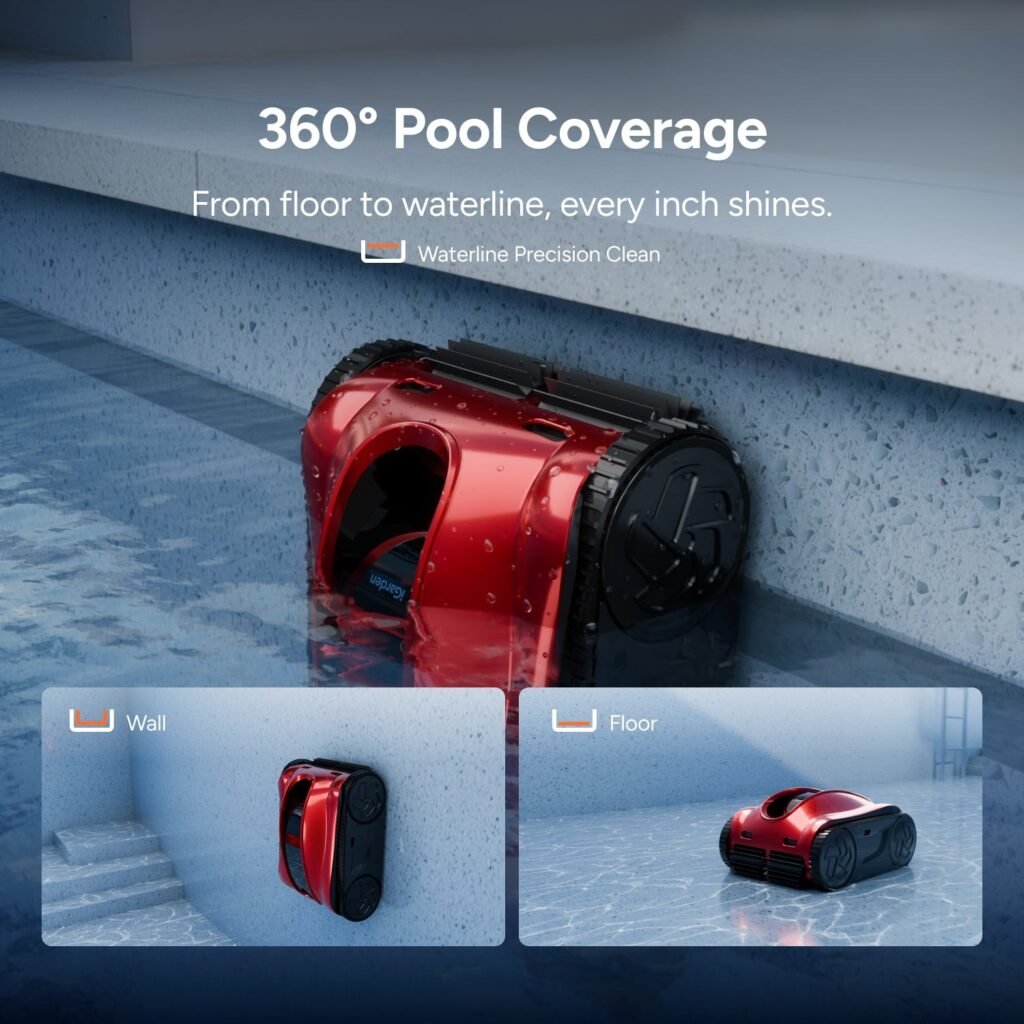
Modern suction mechanisms have moved beyond single-port designs. Dual or triple-intake systems paired with brushless DC motors generate consistent pulling force across varying surfaces, from smooth tile to textured plaster. Variable-speed pumps adjust dynamically based on debris density, meaning the robot doesn’t waste energy running at full power over clean sections. This intelligent throttling directly extends runtime while maintaining thorough coverage. Smart sensors complement this by detecting waterline buildup, measuring turbidity in real time, and identifying areas requiring multiple passes—all without user intervention. The result is a cleaning cycle that self-adjusts rather than following a rigid, one-size-fits-all program.
See also: Mutf_In: Kota_Tech_Fund_79nh2g
Smart Navigation and AI-Driven Efficiency
AI-driven navigation represents the single biggest leap in cleaning precision. Gyroscopic sensors, accelerometers, and in some advanced models like the M1-AI series, onboard processors running path-planning algorithms ensure every square inch receives attention. These systems build internal maps of your pool’s geometry on the first run, then optimize subsequent routes to eliminate redundant passes. Obstacle avoidance using ultrasonic or infrared detection prevents the robot from getting stuck on ladders, drains, or steps—cutting what used to be a 3-hour manual job down to 90 minutes or less with zero supervision.
Spotlight on the M1-AI Series: A Technological Benchmark
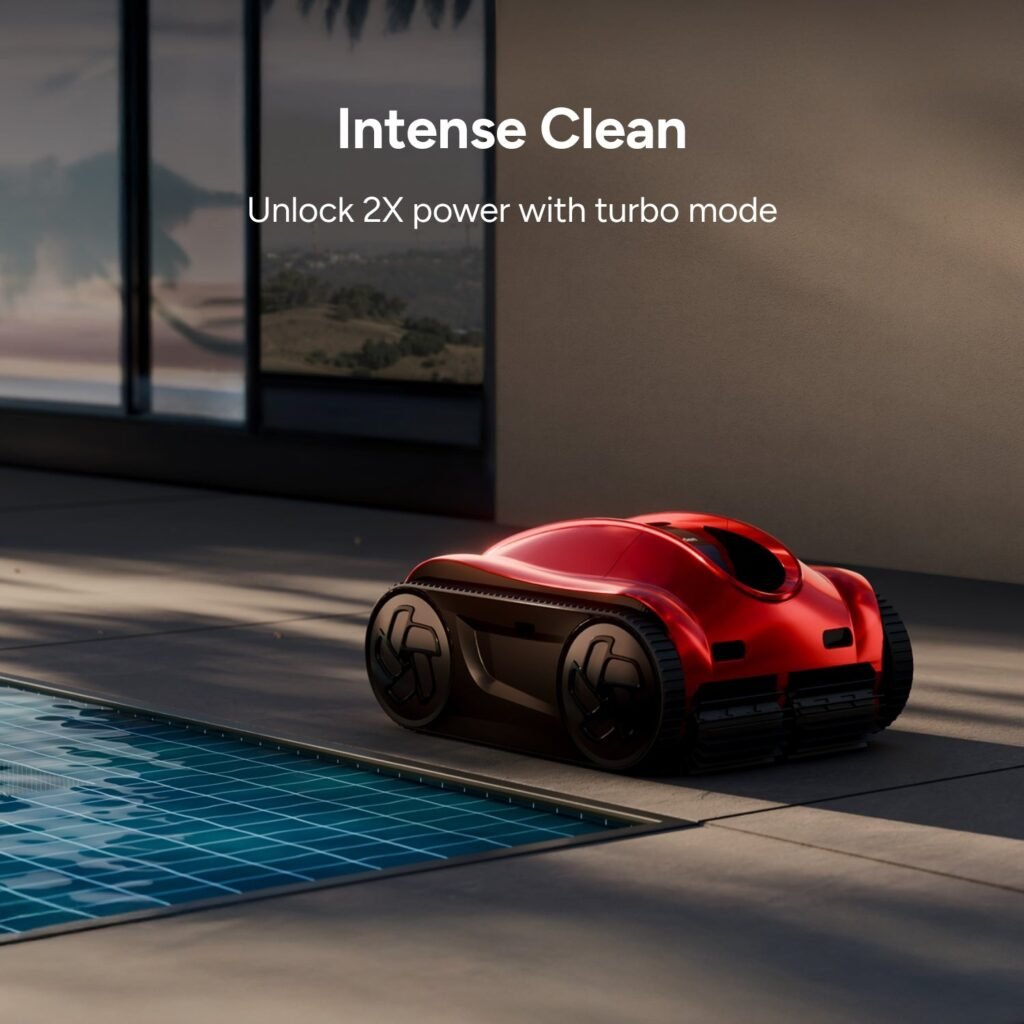
The M1-AI series stands apart in the crowded robotic pool cleaner market by combining onboard neural processing with real-time environmental adaptation. Where conventional models rely on pre-programmed cleaning patterns, the M1-AI continuously refines its approach based on accumulated data from each session. Its proprietary machine learning engine analyzes debris distribution patterns over time, predicting high-accumulation zones—near skimmers, under diving boards, around return jets—and allocating proportionally more passes to those areas without extending total cycle duration.
Compared to standard gyroscope-only navigation models, the M1-AI’s sensor fusion architecture integrates LiDAR-style mapping with pressure-differential feedback from its intake ports. This means the unit doesn’t just know where it is spatially—it knows what it’s encountering at the surface level and adjusts brush speed and suction intensity accordingly. Against competitors relying solely on random or spiral patterns, the M1-AI completes full-pool coverage in roughly 40% less time while consuming less energy per cycle. Its adaptive cleaning cycles automatically shorten when the pool is relatively clean and extend during heavy pollen seasons or after pool parties, eliminating the need for manual mode switching.
When evaluating whether this series fits your needs, start by assessing your pool’s square footage and primary debris type—fine sediment demands different filtration mesh than leaves or insects. Next, consider how frequently you host swimmers, since higher bather loads introduce oils and particulates that benefit from the M1-AI’s turbidity-responsive programming. Finally, check compatibility with your pool’s surface material; the M1-AI’s variable-pressure treads perform optimally on plaster, pebble, vinyl, and fiberglass without risking abrasion. For owners who want a unit that learns their pool rather than simply traversing it, this series represents the current performance ceiling in consumer-grade robotic cleaning.

Adapting to Diverse Pool Shapes for Comprehensive Cleaning
Not every pool is a simple rectangle, and this is where many budget robotic cleaners fall short. Freeform pools with organic curves, kidney shapes, L-configurations, and pools with integrated spas present unique navigation challenges that straight-line programming simply cannot solve. Advanced pool robot vacuums address pool shapes through shape-recognition technology that dynamically adjusts pathing rather than relying on fixed geometric assumptions.
The technology behind this adaptability combines real-time boundary detection with algorithmic path optimization. When a robot encounters a curved wall, its sensors continuously measure the changing angle and adjust wheel speed differentially—slowing one tread while accelerating the other to maintain consistent wall contact. For freeform pools, this means the unit traces the perimeter accurately on its first pass, building a shape profile that informs interior cleaning routes. Rectangular pools benefit from efficient parallel-line sweeping, while irregular geometries trigger adaptive spiral or sector-based patterns that prevent missed zones in tight corners or shallow shelves.
Configuring your device for optimal shape handling involves a few practical steps. First, ensure your pool’s waterline is at the manufacturer-recommended level, since low water exposes surfaces the robot cannot reach and confuses boundary sensors. Second, remove floating obstacles like solar blankets or pool noodles before initiating a mapping cycle—clean sightlines produce more accurate internal profiles. Third, if your pool features a raised spa or attached wading area with a narrow connecting channel, verify that your model’s dimensions allow passage through the transition. Finally, run the initial mapping session with the pool freshly brushed so the robot calibrates against actual surface conditions rather than heavy sediment layers that could interfere with traction sensors. These steps ensure comprehensive coverage regardless of how unconventional your pool’s footprint may be.
Mastering Cleaning Cycles and Runtime for Optimal Performance
Understanding how to optimize cleaning cycles directly impacts both energy consumption and water clarity. Runtime isn’t a fixed number—it fluctuates based on pool volume, debris load, filter condition, and surface type. A 400-square-foot pool with minimal leaf exposure might need only 60-minute cycles three times weekly, while a larger pool surrounded by mature trees could demand daily 120-minute sessions during autumn. The key is matching cycle frequency and duration to your pool’s actual conditions rather than defaulting to factory presets that assume average scenarios.
Several factors determine how long your robot should run per session. Pool size establishes the baseline—larger surface areas require proportionally longer cycles for complete coverage. Debris type matters equally: fine sand and algae spores demand slower passes with higher suction, extending runtime, while surface leaves get captured quickly on standard settings. Filter basket capacity also plays a role, since a full canister reduces suction efficiency and forces the robot to work longer for diminishing returns. Water temperature affects battery performance in cordless models, with colder water slightly reducing available runtime per charge.
To set up an efficient schedule, follow these concrete steps. First, run a full-length cycle and inspect the filter basket afterward—if it’s less than half full, you can safely reduce the next session’s duration by 15-20%. Second, program your robot to operate during off-peak electricity hours, typically early morning, which also means debris from overnight settling gets captured before swimmers arrive. Third, clean the filter after every two cycles to maintain peak suction throughout the runtime window. Fourth, adjust your weekly schedule seasonally: increase frequency during spring pollen and fall leaf drop, then scale back during low-use winter months. Fifth, use your robot’s app or onboard diagnostics to track cycle completion percentages—if the unit consistently finishes early, shorten the programmed duration to conserve energy. Smart home platforms like iGarden can help integrate these schedules alongside your other outdoor automation routines, keeping pool maintenance synchronized with lighting, irrigation, and other connected systems. These adjustments ensure every minute of runtime translates into measurable cleaning results without wasting power or mechanical wear on unnecessary operation.
Embracing Intelligent Automation for Effortless Pool Maintenance
Pool robot vacuums have fundamentally reshaped what it means to maintain a clean pool. Through intelligent navigation, adaptive suction systems, and real-time environmental sensing, these machines compress hours of manual labor into efficient, automated cleaning cycles that require nothing more than pressing a button—or scheduling one through an app. The M1-AI series exemplifies where this technology is heading: machines that don’t just clean but learn, adapting their behavior to your pool’s unique geometry, debris patterns, and usage frequency without manual intervention.
For tech-savvy pool owners, the practical benefits are clear. Shape-recognition technology eliminates coverage gaps in freeform and complex pool designs. Optimized runtime management reduces energy waste while keeping water consistently clear. Adaptive cycle programming responds to real conditions rather than rigid schedules, meaning your pool stays swim-ready whether it’s peak summer or quiet off-season. As AI processing and sensor technology continue advancing, expect these systems to become even more autonomous—anticipating maintenance needs before problems become visible. The smartest move you can make today is choosing a robotic cleaner that matches your pool’s specific demands and letting intelligent automation handle the rest.